
Is this for you?
Manufacturers and exporters of electrical or non-electrical equipment intended for explosive-atmosphere applications.
No matches.Browse services·Discuss your requirement
Industrial Compliance
Last reviewed: 2026-11-08
Need ATEX or IECEx support for hazardous-area equipment? Start with the product, intended gas or dust environment and destination market. Share existing reports and protection concept details so the correct assessment route can be discussed with a suitable specialist.
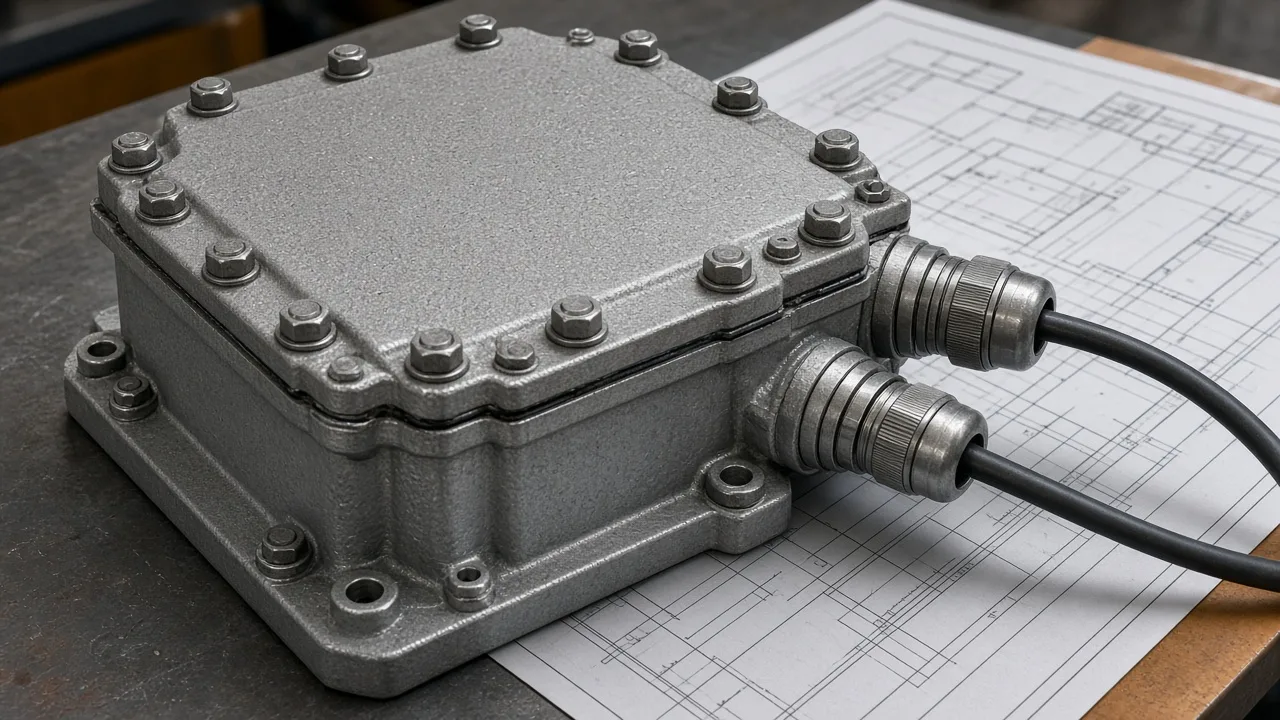
Manufacturers and exporters of electrical or non-electrical equipment intended for explosive-atmosphere applications.
Tell ConformArc what equipment you manufacture, its intended gas or dust environment, destination market and any existing reports. We use these initial details to discuss an introduction to a relevant specialist. The selected specialist confirms equipment classification, applicable assessment route, evidence gaps and whether an appointed testing or certification body must be involved.
Depending on the provider’s agreed scope, the technical work may produce a route or gap summary, identify test and documentation needs, and clarify assessment responsibilities. The provider confirms its own deliverables, quotation and timing. ConformArc handles the initial enquiry and introduction; it does not issue ATEX or IECEx certificates. Where a related safety system also needs a functional-safety review, treat that as a separate scope from Ex product conformity and mention it in your enquiry.
The applicable ATEX conformity route depends on the equipment and its classification. An unregulated voluntary certificate should not be presented as an EU conformity approval; an appointed body acts only within its notified scope. IECEx certificates are issued through the IECEx system’s appointed bodies.
Hazardous-area classification is the starting point for every Ex project. The zone where the equipment will be installed decides the equipment category under ATEX and the Equipment Protection Level (EPL) under IECEx. Your customer or the plant’s hazardous-area classification documents normally tell you the zone. If you do not know it, say so in your enquiry; the specialist can help you ask the right question.
| Hazardous-area zone (gas / dust) | How often an explosive atmosphere is present | ATEX equipment category | IECEx Equipment Protection Level |
|---|---|---|---|
| Zone 0 / Zone 20 | Continuously or for long periods | Category 1 (1G / 1D) | Ga / Da |
| Zone 1 / Zone 21 | Likely in normal operation | Category 2 (2G / 2D) | Gb / Db |
| Zone 2 / Zone 22 | Not likely, and only briefly | Category 3 (3G / 3D) | Gc / Dc |
Equipment Group I covers mining; Group II covers other surface industries such as oil and gas, chemicals, pharmaceuticals, paints, grain and food processing. The gas or dust group and the maximum surface temperature (temperature class) also matter, so share the substances present when you enquire.
It depends on the equipment category and on whether the equipment is electrical. Higher-category equipment needs a notified body; lower-category equipment can often follow a manufacturer-led route, but testing and documentation are still required.
| Equipment | Route under ATEX Directive 2014/34/EU |
|---|---|
| Category 1 (and M1) | EU-type examination by a notified body, plus production quality assurance or product verification by a notified body |
| Category 2 (and M2), electrical equipment and internal combustion engines | EU-type examination by a notified body, plus conformity to type (internal production control with supervised testing, or product quality assurance) |
| Category 2 (and M2), non-electrical equipment | Internal production control, with the technical documentation communicated to a notified body |
| Category 3 | Internal production control by the manufacturer. Testing is still needed to support the declaration |
| Protective systems | EU-type examination plus a production module, or unit verification |
Where a notified body is involved in the production phase, its four-digit number follows the CE mark. Only bodies notified for ATEX, and listed in the European Commission’s NANDO database, can issue an EU-type examination certificate. This table is a summary; the specialist must confirm the route for your equipment, model range and intended use.
The protection concept describes how the equipment prevents ignition. One product can use more than one concept, for example a flameproof enclosure with increased-safety terminals. The concept drives the tests, the construction rules and the marking.
| Code | Concept | Typical use | Standard (examples) |
|---|---|---|---|
| Ex d | Flameproof enclosure | Motors, junction boxes, lighting | IEC/EN 60079-1 |
| Ex e | Increased safety | Terminal boxes, motors, luminaires | IEC/EN 60079-7 |
| Ex i | Intrinsic safety | Sensors, instruments, portable devices | IEC/EN 60079-11 |
| Ex p | Pressurised enclosure | Analyser cabinets, large panels | IEC/EN 60079-2 |
| Ex m | Encapsulation | Small electronic assemblies | IEC/EN 60079-18 |
| Ex t | Dust protection by enclosure | Equipment in dust zones | IEC/EN 60079-31 |
| Ex h | Non-electrical equipment | Pumps, gearboxes, couplings, fans | EN ISO 80079-36 / -37 |
General requirements for electrical equipment are in IEC/EN 60079-0. Confirm the current edition with the specialist.
ATEX is the EU legal requirement. IECEx is an international certification scheme accepted directly or as a basis by many countries. They are separate (see ATEX vs IECEx for a side-by-side comparison), but much of the testing can be shared:
Planning both together usually saves time and money. Tell us all your target markets in the enquiry.
Equipment used in India: if the same equipment will be installed in hazardous areas in India, Indian requirements such as PESO approval may apply. These are separate from ATEX and IECEx and must be checked for your product.
Published international ranges are often quoted from about US$15,000 to over US$100,000 per product family. These figures are indicative only. The selected provider confirms its own quotation, scope and timeline with you, and ConformArc does not set provider fees. For typical price ranges and how to compare quotes across CE projects, read CE certification cost in India. Read also: ATEX vs IECEx.
ConformArc does not test equipment, assess it or issue ATEX or IECEx certificates. We organise your enquiry and, where a suitable specialist is available, introduce you to a provider who can confirm the zone, category, protection concept, route and testing needs. If the product also carries general CE requirements, see CE certification in India and CE for electrical and electronic products.
No. They are separate systems. Some technical evidence may be useful across workstreams, but acceptance and certification must be checked for the target market.
Preliminary gap work can start, but formal evidence should be tied to a controlled configuration so later changes do not make reports unusable.
The relevant independent body under the applicable route, not ConformArc.
Requirements can change. Confirm the current route and applicable edition for the specific product before starting the project.
Tell us the product or company requirement, target market, current stage and what your customer has asked for. We will review the initial details and reply about the next step. You can start without uploading confidential documents.
We use your details to respond to this enquiry. If a suitable external specialist could help, we will tell you who we propose to contact and ask before sharing your name, contact details or project information. The specialist may then contact you about this request. Read the Privacy Notice. See also how we choose providers.