
Is this for you?
Panel builders, equipment manufacturers and integrators defining the assessment scope for an industrial control panel before independent testing or certification work is arranged.
No matches.Browse services·Discuss your requirement
Industrial Compliance
Last reviewed: 2026-11-08
Need to assess an industrial control panel before it is supplied or installed? First identify whether the subject is an empty enclosure, populated panel, distribution assembly or part of a complete machine. Share its function, electrical ratings, destination market and any customer standard so the correct assessment boundary can be discussed.
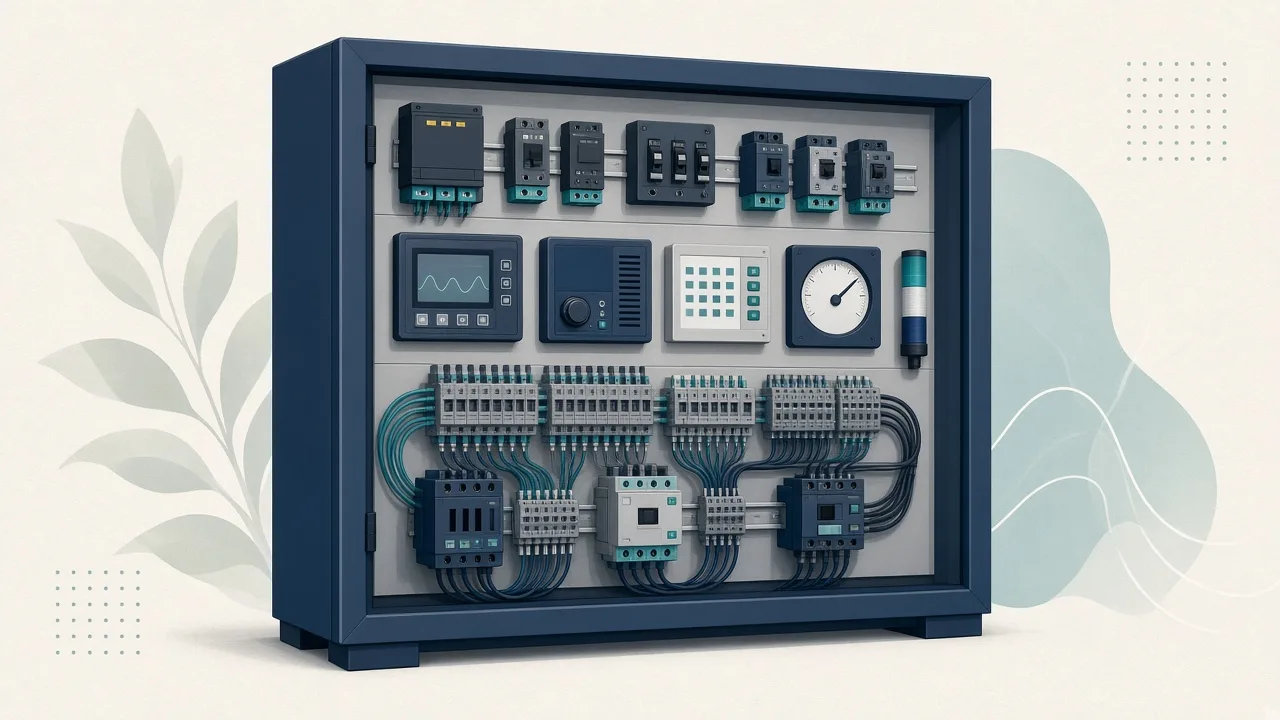
Panel builders, equipment manufacturers and integrators defining the assessment scope for an industrial control panel before independent testing or certification work is arranged.
An empty enclosure, a populated industrial control panel, a power-distribution assembly and the complete machine are different assessment subjects. Begin with the product function, incoming supply, outgoing circuits, loads, environment and installation context. The applicable standard depends on those details.
IEC 61439 requirements may be relevant to particular low-voltage switchgear and controlgear assemblies. UL 508A may be relevant to an industrial control-panel route for North America. These are not interchangeable labels, and neither should be selected solely because a product is called a panel. The technical reviewer confirms applicability, edition and evidence needs.
Useful inputs include circuit diagrams, bill of materials, electrical ratings, component information, enclosure details, protection arrangements, thermal information and existing reports. The agreed scope may involve documentation review, verification planning, laboratory or site assessment and follow-up on gaps. Exact tests and acceptance criteria are established with the relevant technical party.
Certification of a panel or enclosure does not automatically cover every connected machine or load. The assessment boundary must remain clear in proposals, reports and customer-facing claims. Where the panel implements defined safety functions and functional-safety evidence needs, treat that as a related but separate discussion and mention it in your enquiry. For applicable electronic products that also need RoHS evidence, state that substance-compliance request separately from electrical assessment.
The requested NEMA type or IP code may influence the enclosure configuration, but ingress evidence alone does not address every electrical or panel-construction requirement. Changes to ventilation, entries and accessories can also affect earlier enclosure evidence. Link the enclosure plan to the complete panel configuration.
ConformArc can introduce a specialist who, within an agreed engagement, may prepare a scope and input checklist, applicable-route review, evidence-gap register, testing/assessment engagement and corrective-action tracking. Reports, certification decisions and any mark authorisation remain with the responsible independent organisations. A test to a referenced standard is not permission to apply a certification mark.
Project effort depends on design complexity, evidence quality, assembly variants, component suitability, assessment route and changes required. Independent testing or certification costs should be distinguished from coordination fees in the proposal.
Request a panel scope review. Explore the Industrial Compliance service area.
No. They address different standards contexts and should be selected for the actual product and market.
No. The installed equipment and wiring can introduce separate requirements.
Not automatically. See CNC machine safety and machinery safety support when available.
No. Independent certification and mark authorisation remain with the relevant certification organisation.
Tell us the product or company requirement, target market, current stage and what your customer has asked for. We will review the initial details and reply about the next step. You can start without uploading confidential documents.
We use your details to respond to this enquiry. If a suitable external specialist could help, we will tell you who we propose to contact and ask before sharing your name, contact details or project information. The specialist may then contact you about this request. Read the Privacy Notice. See also how we choose providers.